

Built around the radiologist, not around the algorithm.
Histolyx processes each study before it reaches your worklist. By the time you open a case, candidate findings are already marked, lesion measurements are already done, and a structured report is already drafted. Your job is to review and confirm — not to start from scratch.
From DICOM arrival to report draft in under 90 seconds.
Histolyx intercepts studies at the DICOM routing layer — before they enter your worklist — and returns annotated results through the same pathway.
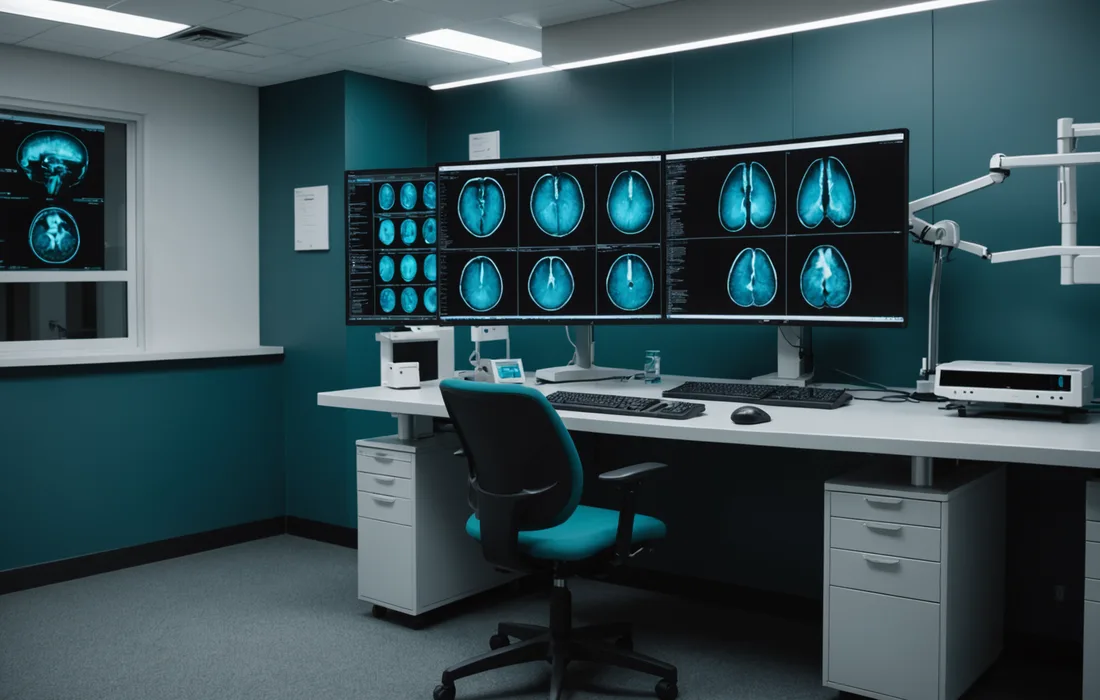
What the radiologist receives.
Histolyx's output is a structured report card delivered alongside the annotated study. It is not a diagnosis — it is a pre-read. Every finding is labeled as a candidate for radiologist review. The radiologist adds, removes, or modifies before signing.
Fields are consistent across studies, making comparison and worklist triage faster. Change-from-prior fields are auto-populated when a matching prior study exists in the PACS.
Four things that matter in a pre-reader.
These are the capabilities imaging center directors ask about most. Each is built into the core product, not an add-on tier.
Change detection across time points
When a prior study exists in the PACS, Histolyx compares lesion size, location, and character against the current study. Nodule growth rates are calculated automatically. No manual side-by-side comparison required.
Natural-language report generation
Findings are compiled into a structured draft in plain clinical language — not raw model output. The format is consistent enough that radiologists can quickly scan it and modify. No prompt engineering required from your team.
PACS integration via DICOMweb
Histolyx connects via standard DICOMweb (WADO-RS, STOW-RS) and DIMSE routing. No PACS replacement required. Configuration is done once at setup; no ongoing IT maintenance after go-live.
Configurable finding thresholds
Radiologists vary in how sensitive they want the pre-reader to be. Histolyx's finding thresholds can be adjusted per modality and per reader. Higher sensitivity catches more; lower sensitivity reduces noise. Your team sets the calibration.
Designed for imaging centers already overwhelmed.
Histolyx integrates at the DICOM routing layer and returns pre-read results before the radiologist opens the case. No new viewer, no clinical workflow changes. Setup is a single configuration session with your IT team — typically 30–60 minutes to configure the DICOMweb endpoint and verify the return path.